



Three Universities of Wisconsin campuses partnered with Royal Credit Union to launch an innovative internship program using AI to support this Wisconsin-based financial institution. This story is one of four in a series showcasing the impact of this collaboration. Read more about the faculty who supported the internship, how the partnership supported the state's economic development and how the collaboration originated.
Computer science students from three Universities of Wisconsin campuses leveraged their knowledge of machine learning to address real-world questions for one of the state’s largest credit unions in a unique internship program.
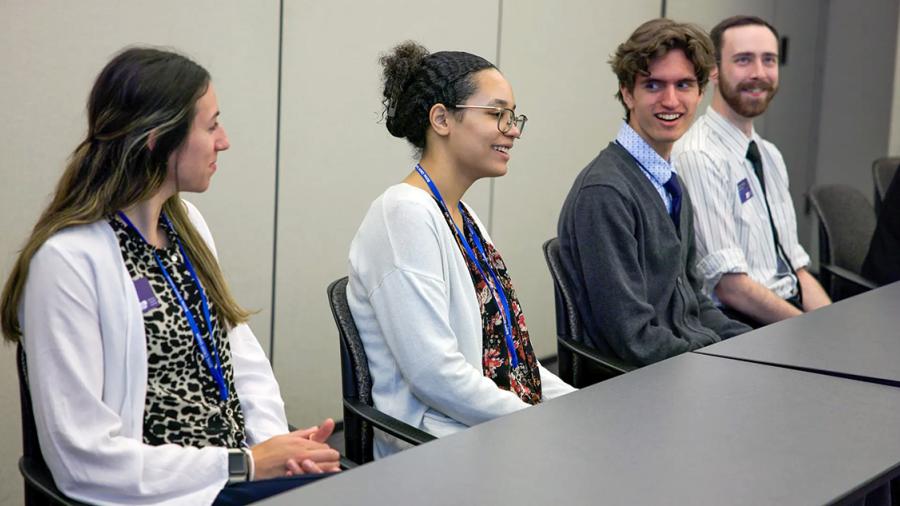
Four students — two from UW-Stout, one from UW-Eau Claire and one from UW-River Falls — honed their professional skills through internships with Royal Credit Union’s AI Innovation Lab last summer. The internship was a pilot program to help Royal implement machine learning, a subset of artificial intelligence in which algorithms are used to find patterns in data to make predictions without explicit programming.
Chris Meyer, Royal’s vice president of IT Innovation and Efficiency, said such partnerships with the Universities of Wisconsin provide “immeasurable” value for the credit union, which serves 330,000 members in western Wisconsin and eastern Minnesota.
“This particular program brought about an opportunity for us to try some new, innovative ideas without the risks of derailing existing strategic projects or core work that were going on with our existing teams,” Meyer said.
“The interns we worked with from UW-Stout, UW-River Falls and UW-Eau Claire absolutely exceeded our expectations,” he continued. “Not only did they bring exceptional skills immediately out of school into the workforce, but they brought a perspective that we don’t always see — a younger perspective in how to approach some of the projects we’re looking at.”
The student interns were Matthew Peplinski and Emmett Jaakkola of UW-Stout, Paige Keller of UW-Eau Claire, and Mariah Waslie of UW-River Falls.
“We got to fully make our own data set, run all these machine learning models, analyze the results, present them, double check our own processes, and lay out a foundation for the company. It’s amazing what we could do as interns,” said Peplinski, of Milwaukee, who graduated in December with a B.S. in applied mathematics and computer science.
“We were the catalyst to all machine learning that Royal was delving into,” explained Jaakkola, of St. Paul, who graduated in December with degrees in both computer science and applied math and computer science.
Leveraging students’ talents
Interns were recruited from the computer science programs at the three universities, all of which are within Royal’s geographic footprint. Once the interns began working in June at the Royal Credit Union Corporate Center in Eau Claire, the students began brainstorming how they could apply their machine learning acumen to the financial institution.
Keller, a UW-Eau Claire senior from Crystal Lake, Illinois, majoring in computer science, was excited by the opportunity, which allowed the students to come up with their own use cases for machine learning. “It’s almost like we were in the driver’s seat as the interns, which was what I loved most about the experience,” Keller said.
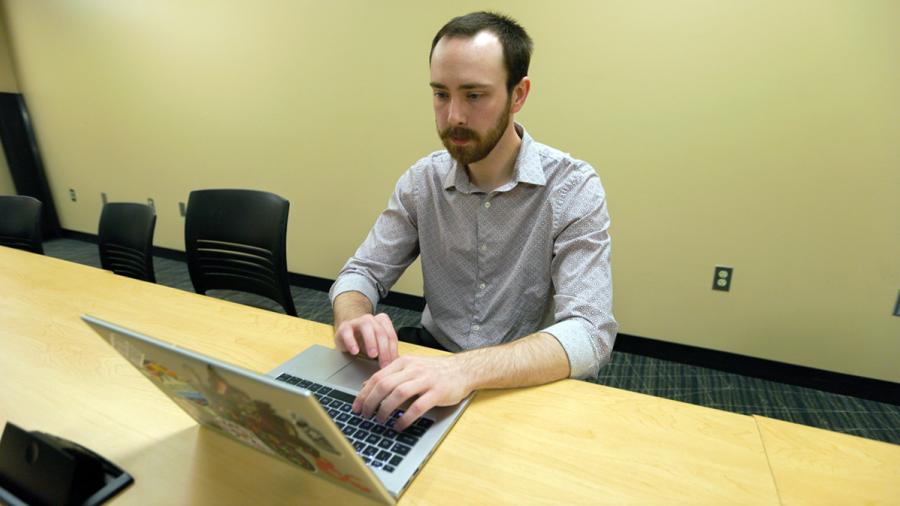
For the first few weeks of the internship, the students delved into Royal’s databases, learning what data was available, creating queries to gather it, and determining how it could be used to make projections.
Working with interns from multiple universities enhanced the experience because of the students’ varied experiences and curriculums, Keller said. “We all helped each other. We all asked each other questions,” Keller said. “We ran into the same roadblocks a lot of times, and so we had to come together and brainstorm. Having that experience from different backgrounds was very useful in coming up with different ideas.”
For example, Waslie — a UW-River Falls senior from Maiden Rock pursing a double major in computer science and data science — was adept at creating models with the programming language R, which the other interns had less experience with. Meanwhile, Peplinski used SQL to combine data and Python to develop models, while also bringing business skills to the table thanks to his UW-Stout minors in business and economics.
With the help of their team leader — Linda Kampa, a senior data engineer at Royal — the interns built a giant table set of more than 100 customer attributes, combining pieces of data from multiple sources. Once all this data had been gathered, the team tried to use it to predict members’ future behavior.
“Building out our own data set was a pretty astounding part of the internship, something that is pretty unique,” Peplinski said. His UW-Stout classmate, Jaakkola, agreed: “Working with a large database like that, it would be hard to get that experience without actually doing it.”
Over the course of the summer, the interns focused on two main classification problems. The first was to determine which factors indicated a member was about to leave the credit union: For example, was it when their balances reached a certain amount, or perhaps when a loan had been paid off? The second aimed to determine a “next best product” that would interest an existing member, similar to how a streaming service algorithm might recommend a new TV series.
AI reshaping industry: Advanced Machine Learning students develop impactful, competitive models
Continue ReadingJaakkola said he was well-prepared by his UW-Stout machine learning coursework to tackle problems for Royal. “I think the foundation we had from our classes really made it possible,” he said. Nonetheless, he added, the tasks were more complex: For example, while the queries he wrote for class might have included roughly 10 lines of code, some he wrote for Royal were as long as 1,000 lines.
The interns worked with managers from many of the credit union’s departments, strengthening their communications skills in frequent meetings and presentations. Part of the project’s goal, Peplinski said, was to create confidence that machine learning could supplement these managers’ own business intuitions.
Peplinski said the experience also helped him hone his technical communication skills. “In the same way that when you’re building machine learning models you iterate and make it better every iteration, I felt we also got better over time communicating results,” he said.
Learning workforce skills
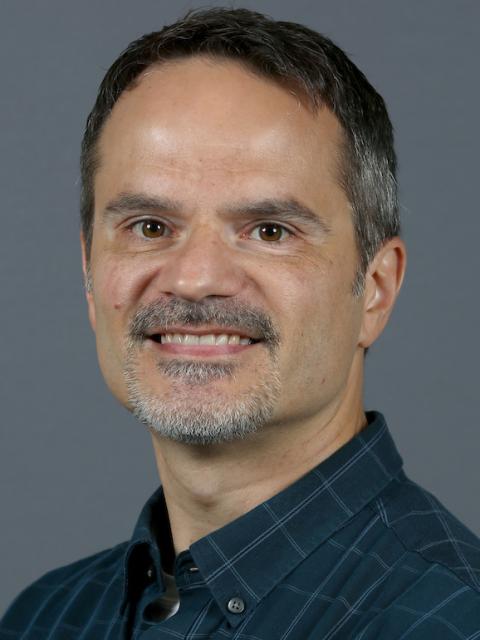
Professor Keith Wojciechowski of UW-Stout’s Department of Math, Statistics and Computer Science, commended Royal Credit Union for putting trust in student interns to create algorithms for the financial institution. “This is like being part of a real research and development team,” Wojciechowski said.
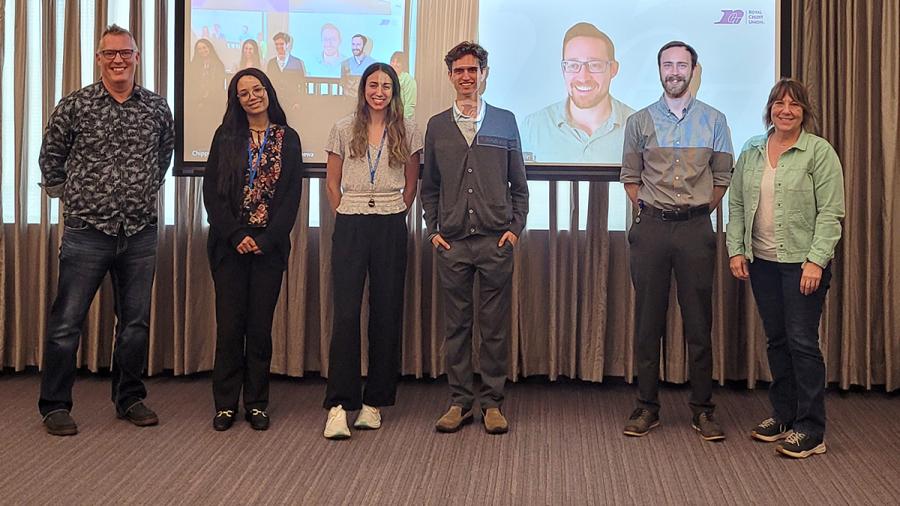
During the course on the internship, Wojciechowski and faculty members from UW-River Falls and UW-Eau Claire met twice with the interns and the Royal Credit Union team, once in the middle of the summer and once at the end for a final showcase of their work.
“Not only are we impressed with their ability to solve the problems, but by their ability to present and work in a professional environment,” Wojciechowski said of the interns. “That’s also a very important skill that they eventually have to learn.”
Kampa, the senior data engineer who worked side by side with the students, said part of the goal of the internship was to determine if Royal is ready to build machine learning models in-house. The interns, she said, were well-positioned to pursue the project.
“They came in with fresh ideas,” Kampa said. “None of them had a lot of financial background, but it was nice to have that clean slate. There were no preconceived notions of how something should work. It really led to a lot of unique and fresh perspectives, unbiased solutions and the recommendations that they made.”
Kampa said the interns arrived with excellent technical skills and absorbed new abilities quickly. The team experienced numerous “lightbulb moments” throughout the summer, she said.
“Early on in the internship, we were meeting to discuss what type of data we would be including to feed into the models,” Kampa recalled. “The idea that we were working through was really a complex concept to understand right away. We met a few times, we worked through some examples and did some whiteboard drawings, and to see the look on their faces when it clicked was really a rewarding experience for both me and the interns.”
Both businesses and students benefit from these collaborations, Kampa added. “Having the interns participate was a win-win for both Royal and the interns, because we got things up and running more quickly with their expertise from all the classes they’ve taken, and it gave the interns a chance to see what it’s like to work in a business setting,” she said.
Having Universities of Wisconsin campuses nearby creates a talent pipeline for the credit union as well as other organizations in the region, added Meyer, Royal’s vice president of IT Innovation and Efficiency. “The opportunity to work with faculty, who are experts in their areas, and students who are learning from them is something unique that we would not be able to do if we didn’t have those universities in our backyard,” he said. “And the opportunity to do that means that we can provide new value to our members, growing our organization in a way that would have been impossible without the universities’ presence.”