


What is Colloquium?
Each semester, all Honors College students explore a new topic through a common reading. We come together for one night over a meal and share thoughts in small groups led by university faculty and staff members. Generally, the discussion is accompanied by a keynote, expert panel, or other group activity.
Colloquium topics are drawn from all areas of study. Recent topics have included books on honesty, free speech, DNA and genetics, local food movements and sustainability, economics, immigration and American identities, and Victorian vampires. We read novels, non-fiction, and sometimes even graphic novels and comics. Colloquium is never the same twice, and by the time you graduate you'll have read a diversity of topics that help stretch your knowledge in news and unexpected ways.
Faculty & Staff interested in participating should contact the Honors College office for more information or to sign up to be a table leader.
2025-26 The Year of Community
- Spring '26: Design for Belonging by Susie Wise
- Fall '25: The Truth about Immigration: Why Successful Societies Welcome Newcomers by Zeke Hernandez
2024-25 The Year of Failure
- Spring '25: The Martian by Andy Weir
- Fall '24: Right Kind of Wrong: The Science of Failing Well by Amy Edmondson
2023-24 The Year of Sound
- Spring '24: True Biz by Sara Novic
- Fall '23: Noise: A Human History of Sound and Listening by David Hendy
2022-23: The Year of Curiosity
- Spring '23: Go West, Young Man by B.J. Hollars
- Fall '22: Range: Why Generalists Triumph in a Specialized World by David Epstein
2021-22: The Year of Connection
- Spring '22: Connected by N. Christakis & J. Fowler
- Fall '21: Klara and the Sun by Kazuo Ishiguro
2020-21: The Year of Resilience
- Spring '21: Between the World and Me by Ta-Nehisi Coates
- Fall '20: The Land of Open Graves by Jason DeLeon
2019-20: The Year of Stuff
- Spring '20: Garbology - Our Dirty Love Affair with Trash by Edward Humes
- Fall '19: Stuff Matters: Exploring the Marvelous Materials that Shape our Man-Made World by Mark Miodownik
2018-19: Facing Failure - A Year of Learning from Mistakes
- Spring '19: The Death and Life of the Great Lakes by Dan Eagan
- Fall '18: Being Wrong: Adventures in the Margins of Error by Kathryn Schulz
2017-18: The Year of Conversation
- Spring '18: A Semi-Definitive List of Worst Nightmares by Krystal Sutherland
- Fall '17: How Does it Feel to Be a Problem: Being Young and Arab in America by Moustafa Bayoumi
2016-17: The Year of Curiosity
- Spring '17: What If? Serious Scientific Answers to Absurd Hypothetical Questions by Randall Munroe
- Fall '16: Nonsense: The Power of Not Knowing by Jamie Holmes
2015-16
- Spring '16: Can't We Talk About Something More Pleasant? by Roz Chast
- Fall '15: Unlearning Liberty by Greg Lukianoff
2014-15
- Spring '15: Running the Books by Avi Steinberg
- Fall '14: The (Honest) Truth About Dishonesty by Dan Ariely
2013-14
- Spring '14: Dracula by Bram Stoker
- Fall '13: The Good Food Revolution by Will Allen
2012-13
- Spring '13: Radioactive: Marie & Pierre Curie - A Tale of Love and Fallout by Lauren Redniss
- Fall '12: The Return of Depression Economics and the Crisis of 2008 by Paul Krugman
2011-12
- Spring '12: The Immortal Life of Henrietta Lacks by Rebecca Skloot
- Fall '11: The Happiness Hypothesis by Jonathan Haidt
2010-11
- Spring '11: "Introduction to Freud's Dream Psychology" by Andre Tridon & "A Counterblast in the War on Freud: The Shrink is In" by Jonathan Lear
- Fall '10: Apology by Plato
2009-10
- Spring '10: Satchmo: the Genius of Louis Armstrong by Gary Giddins
- Fall '09: Roving Mars: Spirit, Opportunity, and the Exploration of the Red Planet by Steve Squyres
2008-09
- Spring '09: Clash of Civilizations by Samuel Huntington & Amartya Sen
- Fall '08: Founding Brothers: The Revolutionary Generation by Joseph Ellis
2007-08
- Spring '08: The Ethics of What We Eat by Peter Singer & Jim Mason
- Fall '07: "Pearls Before Breakfast" by Gene Weingarten, Washington Post
2026-27's Honors College Theme is "The Year of Food"
Fall 2026 Colloquium : Frostbite by Nicola Twilley
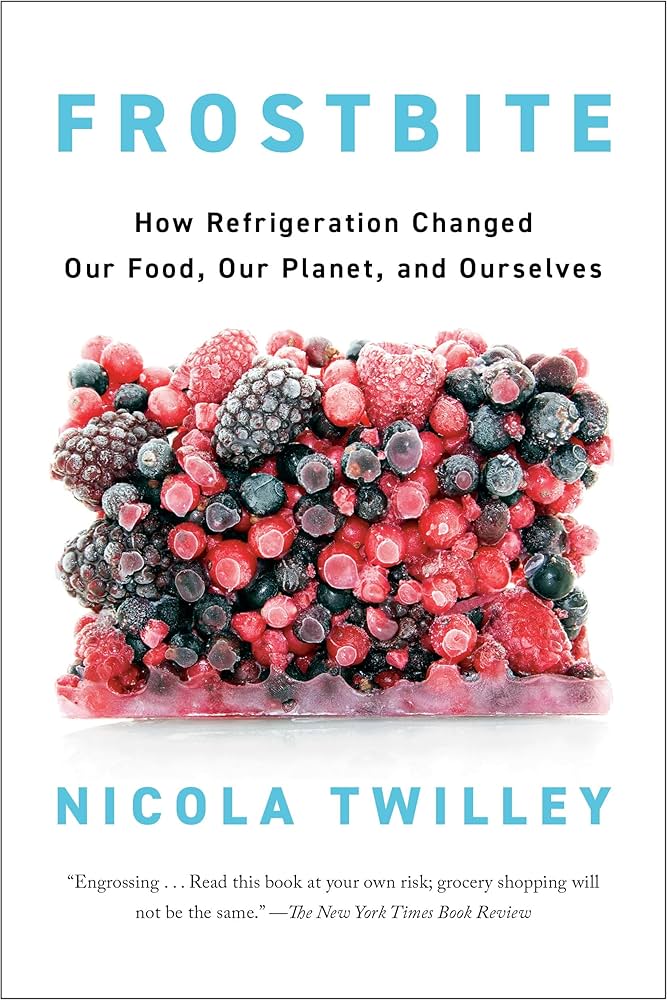
A century ago, the introduction of artificial refrigeration overturned millennia of dietary history, launching a new chapter in human nutrition. We could now overcome not just rot, but seasonality and geography. Tomatoes in January? Avocados in Shanghai? All possible. In Frostbite, New Yorker contributor and cohost of the award-winning podcast Gastropod Nicola Twilley takes readers on a tour of the cold chain from farm to fridge, visiting off-the-beaten-path landmarks such as Missouri’s subterranean cheese caves, the banana-ripening rooms of New York City, and the vast refrigerated tanks that store the nation’s orange juice reserves. Today, nearly three-quarters of everything on the average American plate is processed, shipped, stored, and sold under refrigeration. It’s impossible to make sense of our food system without understanding the all-but-invisible network of thermal control that underpins it. Twilley’s eye-opening book is the first to reveal how refrigeration has changed what we eat, where it’s grown, how it tastes, and—most importantly—how it affects our health and the environment.
In the developed world, we’ve reaped the benefits of refrigeration for more than a century, but the costs are catching up with us. More important, refrigeration is one of the leading contributors to climate change. As the developing world races to build a US-style cold chain, Twilley asks: Can we reduce our dependence on refrigeration? Should we? A deeply researched and entertaining dive into the most important invention in the history of food and drink, Frostbite makes the case for a recalibration of our relationship with the fridge—and how our future might depend on it.
Current Honors students will receive a free copy of the book through UW-Stout Polytechnic's Instructional Resource Services.


