




CLRR helps communities understand what’s happening in their lakes, rivers, and streams and how to make them healthier. Our team studies water quality problems like algae blooms, excess phosphorus, and declining clarity, then provides practical solutions to restore and protect freshwater systems.
CLRR partners with local governments, lake associations, environmental consultants, nonprofits, conservation groups, and state and federal agencies, to diagnose water issues, monitor environmental changes, and create plans that support cleaner, safer, and more enjoyable waterways. Whether your community is dealing with murky water, weed growth, or long term lake decline, we bring the science, tools, and expertise needed to get things back on track.
Services
Laboratory facilities, located in 260 Jarvis Hall, provide the CLRR with extensive analytical capabilities for examining nutrients, primarily phosphorus, and algae in both water and sediment. In addition to routine analytical services, we offer customizable testing and research support tailored to your needs.
- Textural and Physical Characteristics- Analysis of the moisture content and organic matter of sediment.
- Sediment Analysis for Total Nutrients or Metals- Measures the concentration of nutrients and metals stored in sediments, helping identify pollution sources, nutrient loading, and potential risks to water quality.
- Sediment Phosphorus Extractions- Separation of different forms of phosphorus in sediment to determine how much is likely to be released into the water column under changing environmental conditions.
- Sediment Flux (Internal Loading)- Measures how nutrients, especially phosphorus, move from the sediment back into the water, a key factor driving algae growth and water quality challenges.
- Alum Dosage and Alkalinity- Calculates the appropriate amount of aluminum sulfate (alum) needed to treat internal phosphorus loading and improve lake clarity and health.
- Sediment Particle Size Distribution- Identifies the percentage of sand, silt, and clay in sediments, providing insight into watershed erosion, sediment transport, and habitat quality.
- Sediment Oxygen Demand- Measures how much oxygen the sediment consumes, which influences dissolved oxygen levels in the water and affects fish habitat and overall ecosystem health.
- Phosphorus Equilibrium Concentration- Determines the phosphorus level at which sediment begins releasing or absorbing phosphorus, helping predict future water quality conditions and develop treatment plans.
- Chlorophyll-A*- Measures the amount of chlorophyll-a, an indicator of algal biomass, to assess the productivity and overall health of the waterbody.
*Accredited under NR 149 by the Wisconsin DNR.
- Total Phosphorus*- Measures all forms of phosphorus in the water, helping determine nutrient levels that may contribute to algae blooms.
*Accredited under NR 149 by the Wisconsin DNR.
- Soluble Reactive Phosphorus*- Evaluates the immediately available form of phosphorus that fuels rapid algal growth.
*Accredited under NR 149 by the Wisconsin DNR.
- Alkalinity- Measures the water’s ability to neutralize acids, influencing buffering capacity, aquatic life stability, and treatment responses.
- Turbidity- Assesses water clarity by measuring suspended particles such as sediment or algae, which affect light penetration and habitat quality.
- Sediment Coring- Collects vertical columns of sediment to study historical nutrient loading, contamination trends, and longterm ecosystem changes.
- Water Sampling- Collects high quality water samples for laboratory analysis, ensuring accurate measurements of nutrients, chemistry, and biological indicators.
- Flow Monitoring- Measures water movement into and out of lakes, rivers, or streams to understand hydrology, nutrient transport, and watershed impacts.
- Temperature Monitoring- Continuous temperature tracking helps evaluate thermal conditions affecting habitat suitability, algae growth, and seasonal water dynamics.
- Automated Storm Event Sampling- Automated instruments capture water samples during storm events, yielding essential data on runoff, pollutants, and rapid changes in water quality.
- Continuous Multiparameter Monitoring- We use advanced sensors to record real-time data on key water quality indicators such as oxygen, temperature, pH, and conductivity, providing a detailed picture or “profile” of ecosystem health.
Equipment & Expertise
CLRR has a variety of field monitoring equipment for quantifying tributary flow and phosphorus loads discharging into lakes, boats and sampling equipment for monitoring lake chemistry and biology, and coring capabilities for the examination of aquatic sediment. In particular, we have unique expertise for determining important mobile phosphorus fractions in aquatic sediments and nutrient exchanges between sediments and the overlying water.
Cost
Because each lake, river, and watershed project is unique, pricing is determined by the specific analyses and fieldwork required. Contact us for a detailed, no obligation quote based on your goals and sampling plan.
Meet Our Team

Conor grew up in Hudson, Wisconsin, exploring the St. Croix River Valley and developing a passion for freshwater ecosystems. He earned a bachelor’s degree in environmental science with a concentration in Aquatic Biology from the University of Wisconsin–Stout and continued in its Conservation Biology graduate program. During graduate school, he researched how lake sediment contributes to harmful algal blooms with the CLRR Lab, strengthening his expertise in aquatic science. After working in environmental consulting in the Twin Cities, Conor returned to UW–Stout in 2023 as Laboratory Research Coordinator, supporting research to improve freshwater systems.

Andrew grew up in La Crosse, Wisconsin, exploring the Mississippi River and Driftless Bluffs. He earned a degree in Water Resources and Soil Sciences from the University of Wisconsin–Stevens Point in 2018. Andrew began his career with the Wisconsin DNR, serving as a Fisheries Technician and Water Resource Specialist before becoming a Watershed Restoration Coordinator. In 2024, he joined the CLRR as Field Research Coordinator, leading field operations and spending summers sampling lakes across northern Wisconsin to support research that promotes healthy aquatic ecosystems.
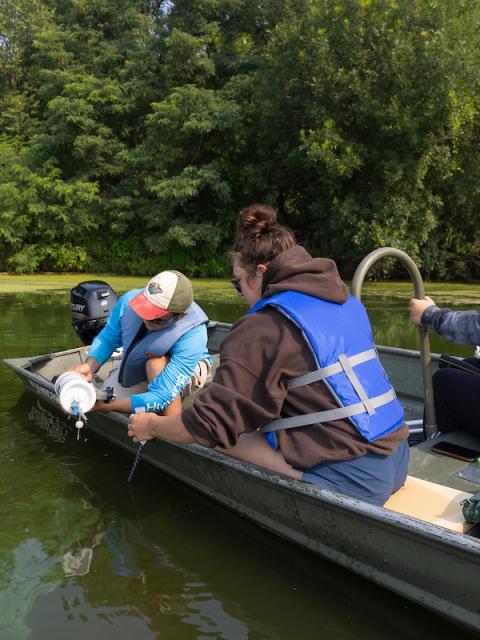
At the Center for Limnological Research and Rehabilitation (CLRR), we are proud to employ dedicated student team members who play an essential role in our work. Our student employees assist with a variety of laboratory and field tasks, gaining hands-on experience that complements their academic studies.
We offer paid internships designed to provide real-world skills in water quality research and environmental science. These positions are flexible to accommodate class schedules, ensuring students can balance work and school while contributing to meaningful research projects.