




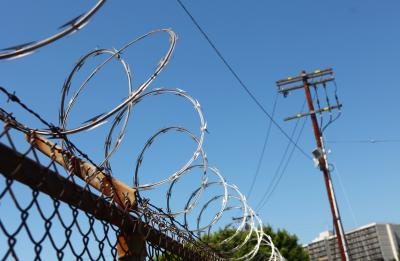
Carceral logics, or the approach to social problems that relies upon control and punishment, are embedded in every institution in the United States, and PK-12 public schools are no exception. Interrogating and challenging carcerality requires a deep study and commitment to prison industrial complex (PIC) abolition, or the ending of policing, prisons, and the kind of society reliant upon state violence to solve social problems. Beyond making cops obsolete, abolitionists remind us that the more covert, insidious forms of policing, also described as soft policing, enacted by public employees, such as social workers and counselors, must also be eradicated. In this course, learners will explore carcerality in schools, the school-to-prison nexus, and abolition as “a practical strategy and long-term goal” toward liberation (Kaba, 2021).
workshop At A Glance

June 22 – July 20, 2026
Option 1-(40 hours)
Option 2-(50 hours)

Online
Online only
Online + Live Sessions

Cost
Varies-See below for
details & discounts!
What will you gain?
Participants will demonstrate conceptual and practical knowledge of prison-industrial complex abolition in schools:
- Participants will explore carcerality in U.S. institutions, including the history of policing and police in schools
- Participants will interrogate soft policing in schools, including the roles of educators in the school-to-prison nexus
- Participants will describe PIC abolition, focusing on community organizing for transformative justice and community care
- Participants will design an abolitionist experiment to apply to their practice
Who should enroll?
This 4-week course is designed for K–12 educators, school counselors, and administrators who are committed to creating more equitable and just learning environments. Whether you work directly with students in the classroom or support them through counseling and school leadership, this course will equip you with the critical frameworks and practical tools to recognize and challenge carceral systems within your school community.
What will it cost?
- Early Bird Discount (Register by June 15th)
- Option 1: $249.00
- Option 2: $299.00
- Stout Proud Discount (UW-Stout Faculty, Staff, Student, and Alumni Registration)
- Option 1: $239.00
- Option 2: $279.00
- Regular Registration
- Option 1: $299.00
- Option 2: $349.00
Important Notes:
- REGISTRATION CLOSES June 22nd, 2026.
- Course Format: Two options
- Option 1: Online only
- Option 2: Online plus live session (opportunities for connection, workshops, and guest speakers).
- CEUs: 4.0 CEUs (Option 1), 5.0 CEUs (Option 2)
- Faculty/Staff/Students: Use your UW-Stout email when registering to receive discount.
- Alumni: Reach out to gieskingj@uwstout.edu to receive a discount code BEFORE completing the registration form.
- Waiting List: Class size is limited, so we encourage you to register as soon as possible! We will have a waiting list and will notify you if a space opens up, in order of completed registration.
- FAQs: For information on Payment and Cancellation Policy, Disability Accommodations, and other issues, please visit the Frequently Asked Questions page.
Riley Drake, Ph.D.
Riley Drake is an Assistant Professor of School Counseling in the Department of Counseling, Rehabilitation, and Human Services. Riley’s vision for educational justice is grounded in education as the practice of freedom, and her research explores how educators honor and struggle alongside young people, families, and community organizers in the movement for abolition.
Riley is a former elementary school counselor and holds a B.S. in Psychology from Truman State University, M.S. in Counseling from Drake University, M.Ed. in Educational Leadership from Iowa State University, and Ph.D. in Social and Cultural Studies of Education from Iowa State University.